Showing posts with label Knowledge. Show all posts

Tuesday, January 8, 2013

Solar Capacity

The sun generates 370 trillion watts per day. Which is equal to 370,000 billion watts per day and further equals to 3,700,000 million watts per day. The average of solar radiation that reaches the earth is equal to 5KW/h per square meter. If we use 2% of the deserts of the world for solar PV plants this can generate electricity for the whole world.

Sunday, September 2, 2012

Terms Used In Renewable Energy (Solar PV)

Global Horizontal Irradiation (GHI):

The total solar energy received on a unit area of horizontal surface.

Capacity Factor (CF):

Capacity factor (usually expressed as a percentage) is the ratio of the actual output over a period of a year to theoretical output if the plant had operated at nominal power for the entire year.


Monday, May 7, 2012

Major Components of Solar PV systems


The major components for solar PV system are PV modulesolar charge controller, inverter, battery bank, and auxiliary energy sources.
PV module – converts sunlight(photons) into DC electricity.
Solar charge controller – regulates the voltage and current coming from the PV panels going to battery and prevents battery overcharging and prolongs the battery life.
Inverterconverts DC output of PV panels  into a clean AC current for AC appliances or fed back into grid line.
Battery stores energy for supplying to electrical appliances when there is a demand.

Auxiliary energy sources - is diesel generator or other renewable energy sources.
Below is a general block diagram of solar PV system.


Thursday, May 3, 2012

Interview Questions Regarding Instrumentation and Process Control


Q1: Which are the basic elements used for temperature measurements in industry?
Bi Metal Strip, Liquid Filled Thermometer, Liquid Filled Thermo Bulbs, Thermocouples, RTD (Resistance Temperate Dependent), Optical Pyro Meter and Infrared Pyrometer. 

Q2: Which are the basic elements used for pressure measurements in industry?
Diaphragm, Bellow, Bourdon Tube (Spiral or Helical), U Type Monometer (Water Filled or Mercury Filled).

Q3: Which are the basic elements used for flow measurements in industry?
Orifice Plate, Venture Tube, Flow Nozzle, Elbow, Pitot tube (Anubar) Ultrasonic, Magnetic Flow Meter, Thermal Flow Meter.

Q4: Which are the basic elements for Level Measurements in industry?
Diaphragm, Bellow, Bourdon Tube It May Be Spiral Or Helical Type, U Type Monometer Water Filled Or Mercury Filled, Capacitance, Ultrasonic, Radar Meter, Radiation Meter, Displacer, Float.

Q5: Which are the commonly Pressure units used?
Psi, Kg, Bar, Milli Bar, Kilo Pascal, Inches of Water, Inches of Mercury Column

Q6: What Is Pt 100 Sensor?
It Is Platinum Wire Temperature Sensor which have 100 Ohms Resistance at 0 Degree Centigrade

Q7: What is the need of third wire of RTD?
Third Wire is use to compensate lead wire resistance (Due to this wire, cable length Resistance is not added in actual resistance)

Q8: Which equipment is used to calibrate pressure instruments?
Pneumatic Calibrator for Low Pressure Range and Dead Weight for High Pressure, 24 Volts Power Supply for Pressure Transmitters, Digital Multy Meter for Checking milli Amperes

Q9: Can DP Transmitter be used for Level Measurements?
Yes it can be used with open or closed tank

Q10: What is suppression of Differential Pressure Level Transmitter?
 To Zero the Effect of Head Pressure At Low Side of Level Transmitter

Q11: Which are the types of Control Valve Cages?
Quick open, Linear and Equal Percentage.

Q12: Which parts include Sin Control Valve Trim?
Plug, Cage and Seat.

Q13: What is Hart Communicator?
It is a Device by which smart instruments can be configure and calibrate .

Q14: What is the Split Range Control Loop?
It is a loop in which one controller is controlling 2 valves in series that is one complete open or close at 0% to 50 % and second open or close at 50 %To 100% Signal

Q15: What Is Buoyancy Type Level Transmitter?
This Transmitter consist of Cage, Displacer and Torque Tube, when liquid rise in cage, Displacer loose his weight and Torque Tube move and change signal output

Q16: Which Type of Cable Are Used In Industry?
For Instruments Signal and Thermocouple Single and Multi Pair Cables Are Used
What Is Color of J and K Type Cables
For J type: Outer cable color is black and inner is red and white For K type: Outer cable is yellow and inner is red and yellow.

Q17: What Is Valve Positioner?
It is used for quick response of control valve by getting feed back when valve open and close.

Q18: What Is I / P Convertor
I/P converter convert the standard 4-20 mA input signal to standard 3-5 Psi signal at its output.

Q19: What is Dead Band of Pressure Switch?
It is the difference of Pressure between Alarm and Normal Conditions.

Q20: What Is Controller PID?
P = Proportional, I = Integral, D = Derivative Every controller used in the industry has these basic functions. P factor controls the overall gain or shoot, I factor controls the change while D factor tells that whether the process value is going to shoot the Set point or decay off before reaching it.

Q21: Which types of drawings are used in Plants
PID (Process Identification Drawing) Instrument Hook up Drawings Control Loop Drawings

Q22: What is square root Extractor?
This instrument is used to convert Non Linear Signal in to Linear Form

Q23: What is the three Element Control?
This Loop Is Normally Used For Boiler Steam Drum Level Control Which Includes Level, Steam Flow and Feed Water Flow

Q24: What is the Cascade Control Loop?
In this control loop one controller is master and other controller is slave These Set Points are controlled by Master Controller which is known as remote set point

Q25: What do you know about PLC and DCS systems and at which you had worked
PLC = Programmable Logic Controller, DCS = Distributed Control System Make Abb, Honey Well, Foxboro.

Wednesday, November 2, 2011

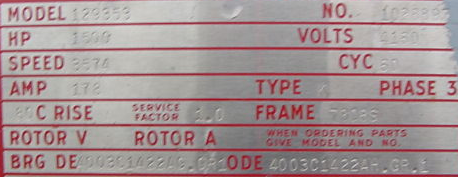
Induction Motor Ratings Mentioned on Nameplate


The name plate of an induction motor provides the following information:

  1. Horsepower (Mechanical output)
  2. Line voltage (Given voltage must not exceed or less than the rated line voltage)
  3. Line current (Given current must not exceed or less than the rated line current)
  4. Speed (rated full load speed not the synchronous speed)
  5. Frequency  (Given frequency must not exceed or less than the rated frequency)
  6. Temperature rise (Temperature rise does not exceed that specified)
You might also like:

Wednesday, October 12, 2011

LED vs Energy saver

LED:
LED has 20 years of life. According to my research 10,000 LED's combine consume 25 watts of energy, this huge amount of LED is enough to fully lighten a big house. When 25 watts of energy are consumed for 40 hours then 1 unit of drops in our energy meters. If one unit costs rupees 3, then it will be the expense of only 3 rupees for 10,000 LED's to glow for 40 hours.


Energy Saver:
Energy saver has small life. It will take at least 40 to 50 energy savers, of 25 watts each, to lighten a big house, which is equal to 1000 watts in total. When 1000 watts of energy are consumed for 40 hours then 40 units will drop in energy meter. If one unit costs rupees 3, then it will be the expense of 120 rupees for 40 energy savers to glow for 40 hours.


You might also like:


Thursday, October 6, 2011

Reason of starting a motor in star and then in delta


Star gives initial low voltage
Reason:
Star connection contains 3 phase wires and one neutral wire. And it gives phase to neutral voltage of 220V.

       
Delta gives high voltage
Reason:
Delta connection contains 3 phase wires only. And it gives phase to phase voltage of 330V.

Advantage:
Supplying high voltage initially will burn the motor and puncture all the wires.

You might also like:

Tuesday, September 6, 2011

Basic Questions for Electrical Engineers


  1. What is the difference between npn and pnp transistor?
  2. What is a semiconductor diode?
  3. What is the difference between n type and p type mosfets?
  4. What is the difference in internal circuitry of a diferentiator and integrator i.c?
  5. What is the difference between star and delta connections?
  6. What is the difference in active and passive components?
  7. What are the hysteresis and eddy current losses of a transformer?
  8. Which is the preferred switching device for industrial applications, BJT, FET or IGBT?
  9. How can we reverse the direction of rotation of a motor?
You might also like:

Sunday, August 21, 2011

How Paper is Made

Product  is 180 gm paper.

Working

Paper machine includes four sections.
  1. Wire Section
  2. Press Section
  3. Dryer Section
  4. Calender Section
Gramage of paper is controlled in wire section. Wire section consist of 3 head boxes where pulp is placed on the wire sheet. These three head boxes produce 3 layers of wet paper. These three layers pass through suction area which consist of porous frames. When layers of wet paper pass through these porous frames, large pumps suck 90% of water from these layers. After wards these layers are combined. After combining these three layers we get a paper layer which has only  10% moisture.
After passing through wire section paper is forwarded to press pawn section where cylinders of approximately 4m of dia, press the sheet. Then press pawn forward the sheet to the dryer section which consist of 39 large cylenders having the temperature of 165 degree C to 170 degree C due to steam heating. This made 100% dry paper sheet.
Further this sheet is forwarded to calender section. This section consist of two cylinders upwards and downwards. Upper cylinder is hard and lower cylinder is soft. Below the lower cylinder there is a large number of pumps. This make paper of equal width all over its area. After this scanner scans the paper for moisture control. And your 180 gram paper is ready now.

  • Agitator are used to shake the pulp.
  • Electrically gramage and moisture of the paper is controlled through PLC from control room.

Basic Electrical Concepts


  • Reactive power  (var) = due to reactive components
  • var = volt-ampere reactive ( correct representation is "var" not Var, VAR or VAr)
  • Active or real power  (Watt)     = power ratings
  • Apparent power (VA)= power consumed

    Active Elements
    Which have the ability to electrically control the flow of electron. Some active devices allow a voltage to control the flow of electron and some allow another current to control the flow of electron. i.e transistor, SCR's, etc

    Passive Elements
    Which have not ability of electrical control of  electrons i.e resistor, inductor, etc


    • Energy generated / year = max. demand * Load factor * hours in a year

    Use of Darlington Pair
    It is used to get high current gain.
    Practically it is used in many circuits, i.e energy savers.


    • In industry one might ask you a question that " how can we get maximum efficiency of a transformer?" The ans is " The efficiency of a transformer will be maximum when the copper loss is equal to the iron loss (Eddy current & Hysterisis).
    • Permissible max flux density in a transformer core is 1.6 to 1.8 weber / m.m.

    Wednesday, August 17, 2011

    Frequently Asked Questions In Electrical Engineering Interviews


    • Where do you see yourself five years down the road?
    • What are the transmission and distribution voltages and frequency in your country?
    • Generally tell us about writing a report to your manager for the scenario is " An instrument is damaged due to the carelessness of an electrician"?
    • If you have 10 electricians working under you, how will you manage them?
    • Tell us one of your good habits and one of your bad habits?
    • Are you trying to overcome your bad habits? If yes, then how?
    • How you can play your role in avoiding load shedding in your country?
    • What is the generation capacity of "X" plant ?
    • What is ozone layer?
    • What is the source of holes in ozone layer?
    • Which waves are used in communication of mobile phone and company tower?
    • Which waves are used in communication of one telecommunication tower (BSC) to other telecommunication tower (BSC or MSC)?
    • Why should we select you instead of any other electrical engineer?
    • What was your final year project?
    • Give details of your final year project?
    • Why did you chose this project?
    • What was your favorite subject in engineering?
    • How can we change the direction of rotation of a motor?
    • What is star delta starter of a motor?
    • In star delta starter, why we start a motor 1st in star and then in delta?
    • What is direct online starter?
    • What are your hobbies?
    • How do you spend your free time?

    Thursday, July 28, 2011

    Best ways to avoid load shedding

    1. Use LED lights
    2. Use Heat Absorbing Glass in windows.
    3. Use LCD instead of Monitors.
    4. Use Controllers to switch off the street lights automatically in day time.
    5. Use solar panels as an energy source.
    6. Switch off extra lights.
    7. Stay united and work together.
    8. If chargers are not in use remove them from socket.

    You might also like: